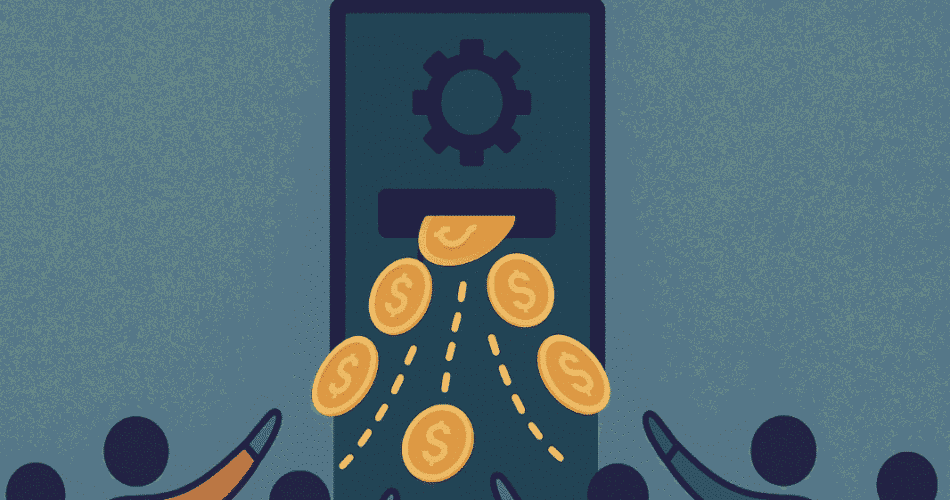
From November 15, 2020, to November 15, 2023, the Infrastructure Funding Plan (IFP) allocated 8% of the eCash (XEC) block reward, or ~500,000 XEC per block, toward development. This amounted to roughly 26.3 billion XEC per year, split evenly between Bitcoin ABC (the primary development team) and the Global Network Council (GNC), a group of large XEC stakeholders that vote on community-funded projects. Assuming an average XEC price of $0.00004 during that period, this translates to about $1.05M annually.
Then on November 15, 2023, the IFP share was increased from 8% to 32% in anticipation of the April 15, 2024 block reward halving. Roughly 43.2 billion XEC was earned by the IFP in those five months, and from the halving to today, another ~69 billion XEC has been earned. In total, that’s about 112 billion XEC, worth approximately $3.37M if we assume an average price of $0.00003.
This means that across the entire period from November 2020 to now, the IFP has generated about $6.5M, or about $1.4M per year, to fund both the core development team and GNC-approved projects.
Based on publicly available Phabricator/Github activity, it appears eCash has typically had the equivalent of about 10 full-time team members, including engineers, a general manager, part-time contributors, and support roles like community and social media managers. The GNC has also funded projects such as PayButton, Agora.cash, and the Chronik Indexer, along with smaller initiatives (some now abandoned).
Even if the entire $1.4M/year went solely to salaries, which it clearly does not, that would mean an average salary of $140K per person. As someone who has worked in corporate America for decades, these numbers seem reasonable accounting for a mix of junior and senior salaries, the lack of benefits, and the risks that comes with working for what is effectively a startup. But unlike traditional startups where early employees are usually given equity, contributors to eCash do not other than any XEC they purchase or earn, meaning competitive salaries are essential to attract and retain talent.
Based on this, the IFP appears well-spent as I can see no sign of lavish pay or wasteful self-enrichment. In other words, the IFP is not being abused, so if the price of XEC were to rise, there’s reason to believe the team would continue to allocate resources effectively.
Now there are some critics who argue the GNC acts as a gatekeeper while deciding which projects get to take advantage of the IFP funds, and that ABC itself acts as a gatekeeper to GNC membership. Some propose letting all Avalanche stakers vote on proposals in public to do away with the gatekeeping. While more democratic on paper, this could also slow decision-making and allow bad actors to siphon funds into vanity or self-serving projects. This is the tradeoff, openness vs. efficiency, and the current model is a hybrid that is part ABC oversight, part community allocation.
All this led me to an important realization:
the eCash project is, at its core, about following the leadership and roadmap set by Bitcoin ABC, and doing so voluntarily.
In traditional politics, citizens of a country can’t easily opt out of governance they disagree with. In crypto, you can leave or rejoin at will:
- Sell your coins and move to another project
- Fork the chain and start fresh
- Rejoin later if your view changes
This opt-in nature changes the meaning of centralization. eCash’s network is decentralized where it matters most: miners, nodes, and security. But development remains concentrated in a trusted team. That trust is earned, not imposed, and if it’s lost, people will leave.
For me, decentralization has always been a means to an end, not the goal itself. The goal is censorship-resistant, peer-to-peer digital cash. Decentralization helps us get there by creating a robust network that has no single point of failure.
But for development, leadership matters. The people making decisions should be those who’ve earned the community’s trust. And if you don’t trust them, we can all agree it is much easier to opt out of eCash than it is to change one’s country of citizenship.
But I believe the current eCash leadership has earned that trust. Their technical achievements are easy to see for anyone who has been paying close attention: merging two revolutionary consensus algorithms, launching staking rewards, building and integrating the Chronik Indexer directly into the node, the advancements of Cashtab and the Agora DEX protocol, and much more.
The bottom line is that the eCash project is open source and opt-in. It’s also open to free market competition. If a better team emerges, they can compete for IFP funding themselves, or even fork the project.
The important thing is everybody gets to decide for themselves. Satoshi Nakamoto democratized money, and while we can’t fork a country, we can fork Bitcoin, which is exactly what the eCash team did.
Whether or not you want to follow their roadmap, however, is entirely your choice, and that’s the essence of decentralization.
Thank you for reading and for the 1000 XEC. Feel free to share your thoughts in the comments.
The roadmap has been set up by the entire community from the get go. This is in a time where BCH has its most supporters and contributors, with big businesses and devs even from out of the crypto industry came together to create this roadmap. Bitcoin ABC surely brought their vision to the table, but all in all, the roadmap itself was a group effort.
As for GNC, I think it is important for GNC to realize that it is its own entity. If something needs to change, the best and ideal outcome is for the GNC to organize whatever improvements its members hope for.
Personally, I am not eager to increase forum discussions to achieve openness, but I am in favor of binding who is and is not part of the GNC to Avalanche stakes, simply to not make it an arbitrary decision. This kind of openness makes sense to me. It was fine to launch it that way in a time where there has no staking existed, but now that we have Avalanche staking nodes, the GNC can be comprised of those.
I don’t have any solutions, which is why I’m willing to defer to ABC for now. I always have the freedom to exit if things change. Probably not the best attitude, but until I can come up with a better answer, this is my stated position.
Are you also going to leave ecash, is that it?
No plans to at the moment. I’m a volunteer supporter, not paid by anyone, so I can’t be fired or laid off. But the point is, we can all leave or rejoin at will. That is the beauty of crypto.
If large whales can request to become GNC members, they could also manipulate decisions. That risk exists regardless — the difference is whether it’s controlled by a small group or by open, transparent rules.
But that is part of my point. Since ABC reviews GNC applications, they can try to ensure only those who have demonstrated they have the best interest of the project in mind are given membership and not just some random whale who isn’t known in the community.